A Language of One
On the early boards, you were "elite" or you were a "lamer." The language itself was the firewall. A secret history of "Leetspeak," exploring how a coded vernacular became a self-selecting interface and a signal of mastery.
1 min read
Nov 14, 2025
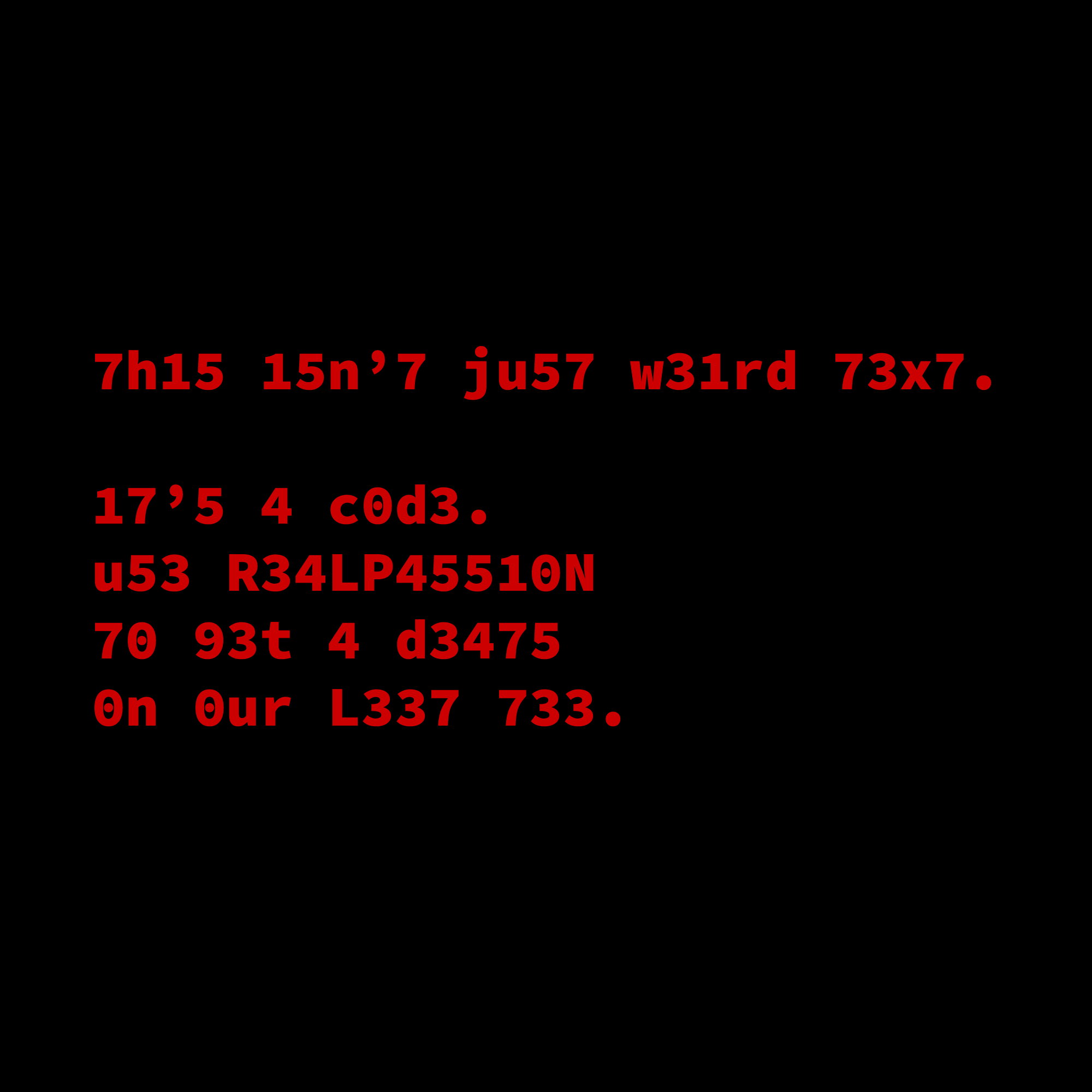
On the early boards, you were either "elite" or you were a "lamer." The language itself was the firewall.
On the pre-web bulletin board systems, language was the firewall. "Leetspeak," or "1337," wasn't a meme. It was a utility.
An alphanumeric cypher. Used by "elite" warez groups to bypass the sysops' text filters. It let them trade philes in plain sight.
More than a tool, it became a shibboleth. If you couldn't read the .nfo file, you were a "lamer." You were out. It was a coded, evolving vernacular. A signal of mastery that defined the digital underground.
The design principle is language as a self-selecting interface. "Leetspeak" is not typography. It is a functional firewall. Its "aesthetic"—the jumble of numbers and symbols—was not a style. It was its core function. An access key made of text, designed to create intentional friction.
The system was a passive gate. If the interface was unreadable, you were the "lamer" it was designed to repel. A perfect, self-selecting mechanism.
This is mastery as collective discipline. The craft of "1337" wasn't a solo invention. It was a shared, obsessive act of linguistic engineering. It required the discipline of a whole community to evolve a cypher, inventing new substitutions faster than the sysops could filter them.
This wasn't playful slang. It was the serious, painstaking work of maintaining a firewall built from pure text. The commitment was to the group. A shared discipline to protect the culture.
This is the signature of the in-group. Restraint is the discipline to build a filter, not a magnet. Mastery is the collective craft of the evolving cypher. Taste is the signal that only the initiated can read.
The language is the firewall.